Surfing in Weligama: A Beginner's Guide to Sri Lanka's Surf Town
3 min read
Weligama is one of the easiest places in Asia to stand up on a surfboard for the first time. The bay is wide and the bottom is mostly sand. The waves roll in gently, and the water is warm all year. Surf schools line the beach road. Every guest at Surfing Life has their own reason for coming, but most of them end up in the water at some point.
This guide covers what first-timers and returning surfers want to know before they arrive.
Why Weligama works for beginners
Weligama Bay faces south into the Indian Ocean. The bay’s shape takes the energy out of bigger swells, so the main beach usually has small, slow, forgiving waves. They’re ideal for practising your pop-up.
- Sandy bottom. On most of the main beach you fall onto sand, not reef.
- Lots of space. The bay is long, so you can usually find a quiet patch away from the crowd.
- Warm water. The sea stays around 27–29 °C, so a rash vest or boardshorts is all you need.
- Lessons everywhere. Instructors work the beach every day in season. A single lesson can get you from “never tried” to riding white water.
When to surf Weligama
The south coast has its best surf season from roughly November to April. The northeast monsoon keeps the south and west coasts drier, and offshore winds clean up the waves.
From May to October the southwest monsoon brings more rain and wind to this coast. Waves get bigger and messier, so beginners have fewer good days. Experienced surfers often head to the east coast around Arugam Bay at that time of year. Some still enjoy the quieter, cheaper south. For a month-by-month look, see our guide to the best time to visit Weligama.
The best conditions are usually early in the morning, before the wind picks up. Plan to be in the water around sunrise, then have a slow breakfast after.
Beyond the beginner bay
Once you can catch green waves and turn, there are a number of reef and point breaks within a short tuk-tuk ride of Weligama, heading west towards Midigama and Ahangama. These waves are faster and break over reef. Go with someone who knows them, check the tide, and consider reef boots.
The best spot on any given day depends on swell, wind and tide. Ask us in the morning and we’ll point you in the right direction.
What to pack
- Reef-safe sunscreen with high SPF. The equatorial sun is strong, even on cloudy days.
- A rash vest or surf leggings to protect against sunburn and board rash.
- Reef boots if you plan to surf the reef breaks.
- A small first-aid kit with antiseptic for minor reef cuts.
- Lightweight, quick-dry clothes. Things dry slowly in the humidity.
You don’t need to bring a board. Rental boards for beginners are soft-tops, which are safer and float better than hard boards.
Renting and storing boards at Surfing Life
Our owner, Eric, is a surfer himself. He knows how much easier a trip gets when the board side is sorted. At Surfing Life we offer:
- Surfboard rental at fair rates. Ask at reception and we’ll match you to a board for your level.
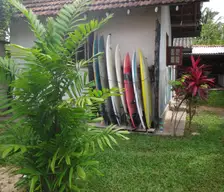
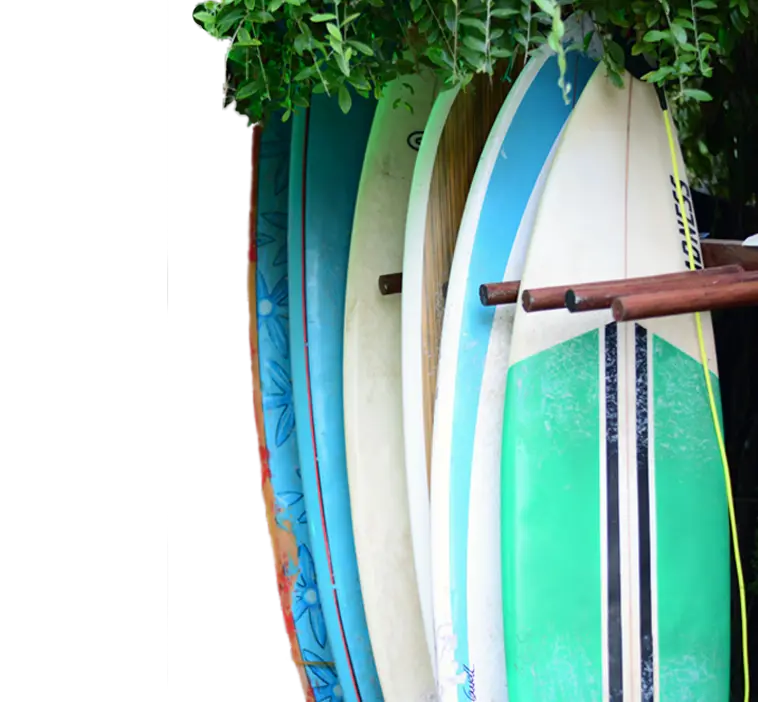
- Secure, upright board storage if you’re travelling with your own quiver.
Rates change with the season and board type, so message us on WhatsApp for current prices.
Surf etiquette in a busy line-up
Weligama gets busy in peak season. A few simple rules keep everyone safe and happy:
- The surfer closest to the peak has priority. Don’t drop in on someone already riding.
- Don’t paddle through the middle of the break. Go around the side, through the channel.
- Hold on to your board. A loose board in a crowd hurts people.
- Respect the locals and the instructors. They’re working, and they know the waves best.
Plan your surf stay
The easiest surf trip is one where the waves, your board and your bed are all close together. Have a look at our rooms, from budget doubles to air-conditioned deluxe rooms. When you’re ready, send us a booking request with your dates. We’ll come back to you with availability and rates.